Your Knowledge Base Is Now AI Infrastructure
Your knowledge base is now at the heart of your AI infrastructure. Here's why.


Last week I was troubleshooting a payment issue at 2 AM (because apparently that's when all billing problems decide to surface 🙄). Instead of digging through endless help articles, I asked the company's AI assistant a specific question about failed transactions.
Within seconds, it gave me a detailed response that pulled information from three different knowledge base articles, synthesized the relevant parts, and even suggested next steps based on my account type. The answer was better than most human responses I've gotten.
That's when it hit me: their knowledge base wasn't just documentation anymore. It had become the brain that powered their entire support experience.
The Infrastructure Revolution You Didn't See Coming
Something massive has shifted in how we think about documentation. Your knowledge base has quietly evolved from a simple repository of help articles into critical business infrastructure.
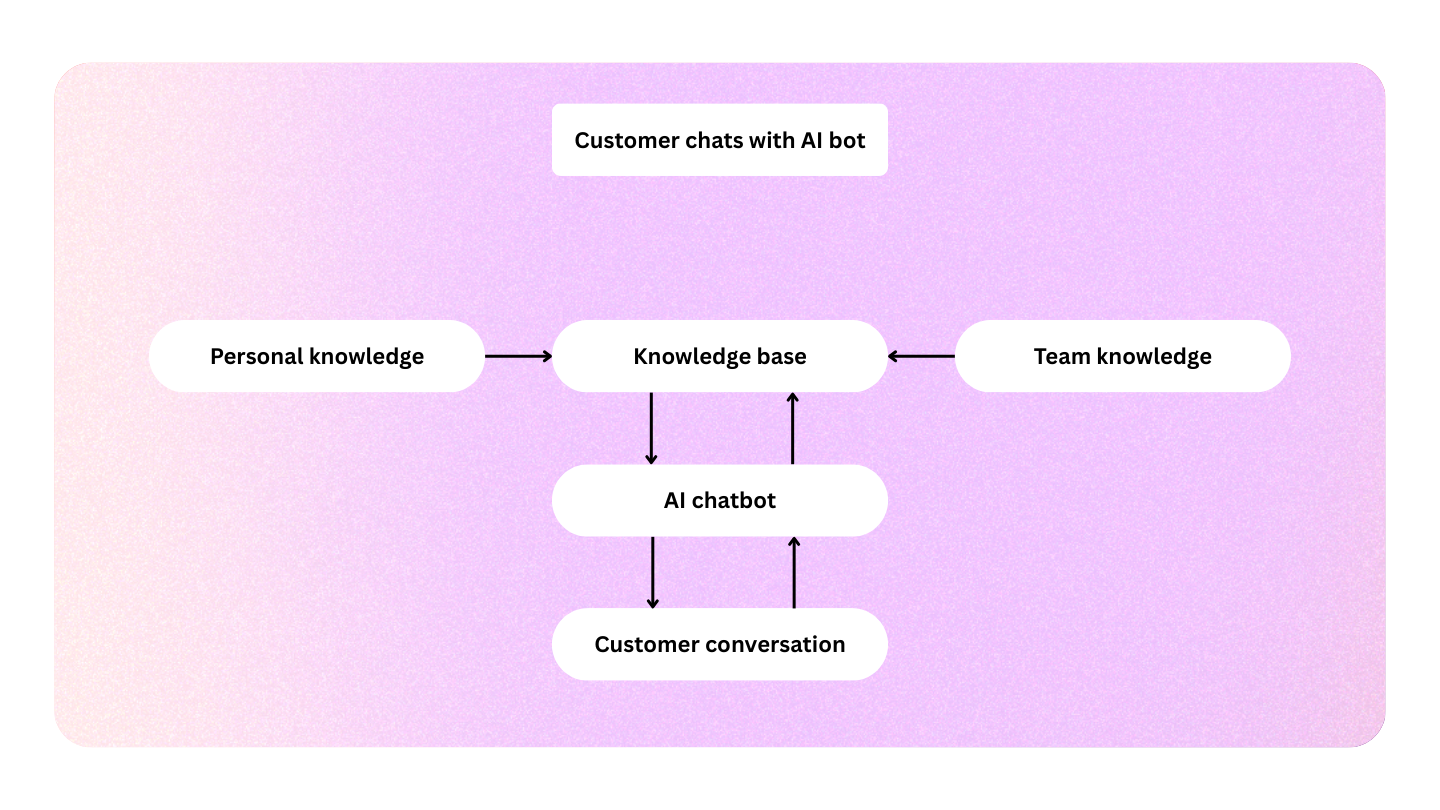
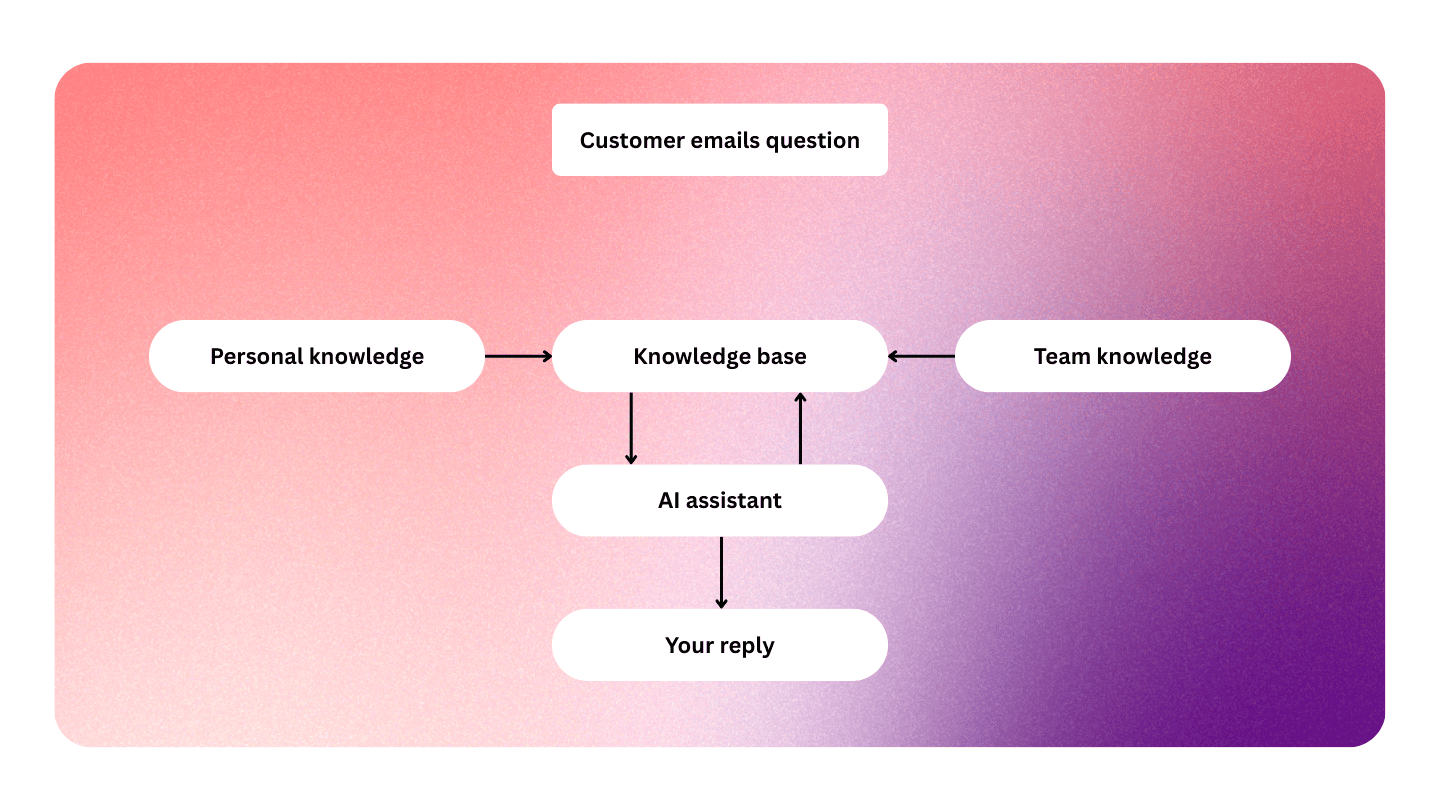
AI has changed the customer support model
Think about it. When someone asks your AI chatbot a question, where does the answer come from? When your support team gets suggested responses, what's powering those suggestions? When customers search for help, what determines whether they find useful information or give up and email you?
Your knowledge base. Every single time.
This isn't just about having "AI-friendly" documentation. We've covered how AI systems discover and use your content before. This is about recognizing that your documentation has become the foundation layer that everything else builds on.
Companies that understand this are creating dramatically better support experiences. Companies that don't are watching their AI initiatives fail despite having perfectly decent help articles.
What Infrastructure-Grade Documentation Looks Like
When your knowledge base becomes infrastructure, the standards change. You can't treat it like a collection of independent articles anymore.
Infrastructure needs to be reliable.
And that means your documentation can't have gaps, inconsistencies, or outdated information. When an AI system pulls from five different articles to answer one question, those articles better tell the same story.
"Infrastructure needs maintenance. You wouldn't run production servers without monitoring and updates. Your documentation deserves the same attention"
Infrastructure needs to be structured. Your internal linking, categorization, and content hierarchy aren't just nice-to-haves anymore. They're literally determining how well your AI systems can understand and use your content.
Infrastructure needs maintenance. You wouldn't run production servers without monitoring and updates. Your documentation deserves the same attention because it's serving the same critical function.
The companies getting this right are treating their knowledge base teams like platform teams. They're investing in tooling, processes, and people because they understand that everything downstream depends on this foundation being solid.
The Compound Effect of Better Documentation Infrastructure
Here's where this gets exciting. When you nail the infrastructure layer, everything built on top of it gets better automatically.
Your AI chatbot becomes more accurate because it's working with higher-quality, more structured information. Your support team gets better suggested responses because the underlying content is more comprehensive. Your customers find answers faster because the search and discovery systems have better data to work with.
It's like upgrading from a dirt road to a highway. Sure, cars could drive on the dirt road, but now everything moves faster and more smoothly.
We've talked about building proactive support that prevents tickets before they happen. Infrastructure-grade documentation takes this to another level. Instead of just deflecting tickets, you're powering entire automated support experiences.
Customers get instant, accurate answers. Support teams focus on complex issues instead of routine questions. AI systems actually work reliably instead of hallucinating responses.
Making the Mental Shift
The hardest part isn't the technical implementation. It's changing how you think about documentation work.
Most teams still approach their knowledge base like a content marketing project. Write some articles, publish them, maybe update them occasionally. That worked fine when documentation was just there for people to read.
But infrastructure thinking is different. You start asking questions like: "How will this content integrate with our other systems?" and "What happens when an AI tries to synthesize this with information from other articles?"
You start caring about things like content consistency across articles, clear hierarchies of information, and comprehensive coverage of topics. The fundamentals of good documentation become critical because systems depend on them.
You start measuring success differently too. Instead of just tracking page views and search success rates, you're looking at how well your AI systems perform, how often automated responses actually solve problems, and how much work you're taking off your support team's plate.
The Practical Path Forward
If this feels overwhelming, start small. Pick one area of your documentation that your AI systems interact with most often. Maybe it's your billing section, or your getting started guides.
Audit that section with infrastructure thinking. Are all the articles consistent with each other? Do they cover edge cases and common variations? Is the information structured in a way that systems can easily parse and combine?
Fix the gaps. Update the inconsistencies. Make sure the internal linking creates clear pathways between related concepts.
Then watch what happens to your AI-powered features in that area. You'll probably see immediate improvements in response quality and accuracy.
Once you've proven the value in one section, expand the approach. Build processes to maintain that quality level. Train your team to think about how content will be used by systems, not just humans.
The companies that make this shift are building sustainable competitive advantages. They're creating support experiences that actually scale. They're turning their documentation from a cost center into a force multiplier for their entire support operation.
Your knowledge base isn't just help docs anymore. It's the engine that powers how your company helps customers. Time to start treating it like the critical infrastructure it's become 🚀