The No Bullsh*t Guide to Knowledge Bases: Part 1
You know you should write it down. You're not going to. This chapter is for people who are tired of lying to themselves about it.

You're going to see this ticket again tomorrow
You know that question. The one that just landed in your inbox for the fifteenth time this month.
You've answered it so many times you could type the response with your eyes closed, during an earthquake, while someone shouts random numbers at you.
And every single time, there's that fleeting thought: I should really write this down somewhere. But you won't.
You won't because you've got six other tickets staring at you, someone's marked theirs as URGENT in all caps (it isn't, it never is, but you'll check anyway), and honestly the thought of opening a blank document right now makes you want to crawl under your desk and take a nap.
So you answer the ticket.
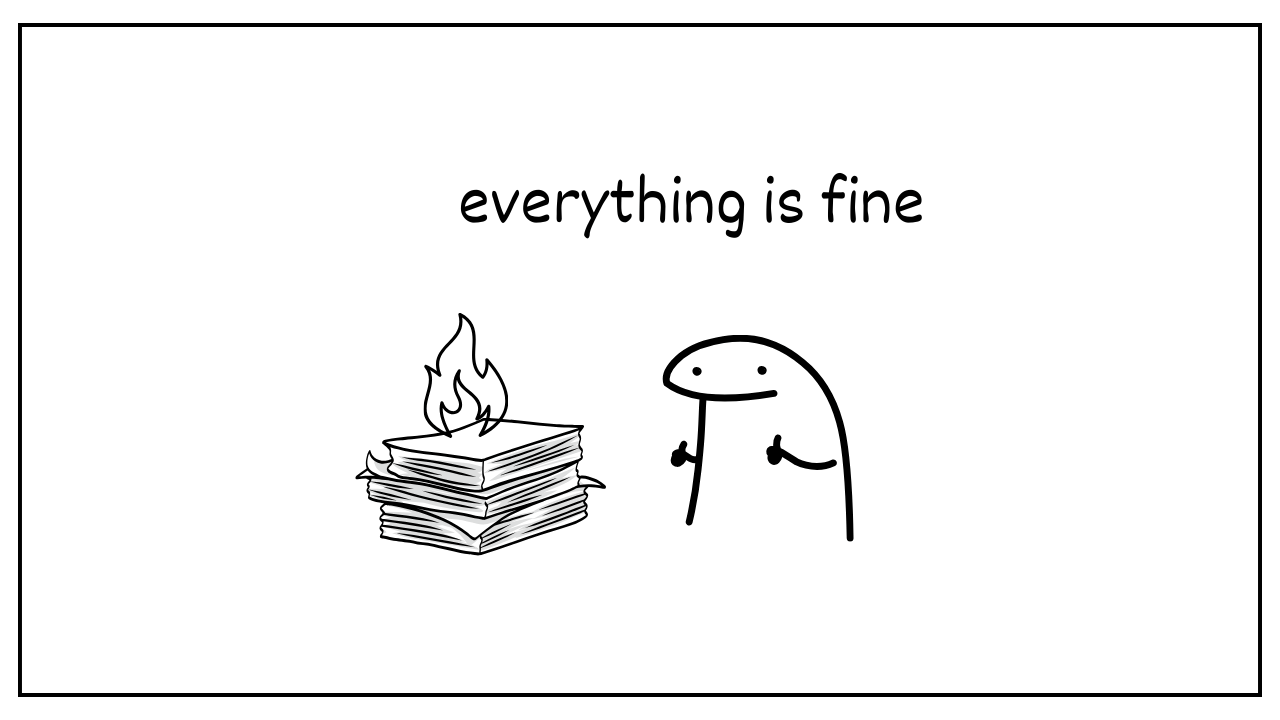
You close it with that tiny hit of dopamine. Job done, ticket solved, I am useful! you chant. And tomorrow, like clockwork, it comes back. Different name, same question. The universe's most boring practical joke, and you're the punchline.
Here's the thing you won't admit out loud: part of you has made peace with this.
The inbox has become a weird comfort. Refreshing it, watching for the next question, answering it in record time. It feels productive. It feels like work.
Writing documentation feels like homework. Boring, invisible homework for a problem that might not even get fixed, because what if you write the perfect article and some absolute menace emails you the same question anyway?
So you keep answering. Keep closing. Keep watching the same questions circle back like boomerangs you never asked for.
And somewhere in the distance, money burns.
The maths you're avoiding
Let's do the calculation you've been refusing to do.
McKinsey (who seem to do a lot of things but nobody quite knows what) worked out that employees spend 1.8 hours every single day just searching for information.
Not doing their jobs. Looking for the stuff they need to do their jobs. That's nearly a full day every week spent rummaging through Slack threads, old emails, and Google Docs with names like "Process FINAL v3 ACTUALLY FINAL (use this one) - Copy.docx."

One in five employees. Permanently off looking for answers that should already exist. That's not an inefficiency. That's a whole person you're paying to wander around looking confused.
Scale it up and it's properly obscene. Fortune 500 companies lose an estimated $31.5 billion annually on this. Billion. The kind of number that stops meaning anything because your brain can't process it.
Every time you type out the same explanation you typed last Tuesday, you're choosing to spend time on something you've already done. That's not working. That's just... doing the same thing again. A very elaborate, very expensive form of treading water.
But sure. Answer the ticket again. It's fine.
The lies you tell yourself
Let's be honest about why you haven't fixed this. Not "honest" in a gentle, understanding way. Actually honest.
- "I don't have time."
You have time. You spent twenty minutes this morning reading Slack channels you're not even part of. You've checked LinkedIn twice today and you don't know why. You have time.
What you don't have is the motivation, because documentation is boring and tickets are immediate and your brain is wired to prioritize whatever's screaming loudest.
- "I tried it once and nobody read it."
So you wrote one article, it didn't immediately solve all your problems, and you gave up? That's not "it doesn't work." That's you abandoning something before it had a chance. One article isn't a knowledge base. It's a Post-it note in an empty room. Of course nobody found it.
- "People will just email anyway."
Some will. Some always will. But this is like saying "some people will still litter, so why have bins?" You're not trying to eliminate tickets. You're trying to stop answering the same one forty-seven times. Different goal.
- "I'm not a writer."
You write tickets all day. You explain things to strangers constantly. You're literally a professional explainer. The only difference between a ticket response and a help article is that one of them saves you from doing it again. Stop hiding behind "I'm not a writer" like you're being asked to produce a novel. You're being asked to copy-paste with slightly more structure.
- "It's not my job."
Whose job is it, then? Who's going to magically appear and document all the stuff that only you know? The documentation fairy? Nobody's coming to save you. If you want it done, you're going to have to do it. Or keep answering the same questions until you retire. Your call.
Look, these aren't stupid reasons. They're very human reasons. But they're also the reasons you'll still be answering this exact ticket in six months, and twelve months, and probably when the sun explodes.
At some point you have to decide if you want to stay comfortable or actually fix something.
The embarrassingly simple starting point
Here's the secret nobody tells you: you've already written your knowledge base. It's sitting in your sent folder. Hundreds of explanations, written under pressure, refined through repetition, already in your voice.
You've been doing the work this whole time. You just haven't been saving it anywhere useful.
So stop treating documentation like a creative writing project. Go find the best ticket response you've written this month—the one where you were clear, maybe even helpful, where you actually nailed the explanation instead of rushing.
Copy it. Paste it into a document. Fix the typos. Remove the bit where you said "Hope that helps!" because that's ticket muscle memory and nobody needs it.
Congratulations. You have an article.
This isn't a hack. This isn't cheating. This is just not being a martyr about it. You've already done the hard part. You've figured out how to explain the thing. All you're doing now is putting it somewhere other than a closed ticket that nobody will ever see again.
If this feels too easy, you're overthinking it. Most good documentation is just ticket responses with better formatting. That's it. That's the whole trick.
The system (because you need one)
Here's how this works in practice, for people with actual jobs and no spare time:
The "one ticket, one article" rule
Every time you answer something and think "I've said this before," you have a choice: You can close the ticket and move on (which is what you've always done) or you can spend five extra minutes turning it into an article.
Five minutes. Not an hour. Not "when I have time." Five minutes, right now, while the explanation is fresh.
The maths:
- First time: 10 minutes answering + 5 minutes documenting = 15 minutes
- Every time after: 30 seconds to paste a link
If that question comes up twice more this month, and it will, you've broken even. Ten times? You've saved an hour. A hundred times over the next year? You've bought back an entire week of your life.
This isn't complicated. It's just discipline. Which, admittedly, is harder.
The fifteen-minute rule
You don't have a spare afternoon to "work on documentation." Nobody does. That afternoon doesn't exist. It's a myth, like inbox zero and work-life balance.
What you have is fifteen minutes at the end of the day. Before you close your laptop, look at what you answered. Pick the question you've answered before. Write it up. Publish it. Go home.
Not perfect. Published. There's a difference, and it matters. A mediocre article that exists helps more people than a perfect article that's still in your drafts three months later.
The guilt redirect
You know that time you spend feeling bad about not having documentation? That nagging background anxiety? That's probably twenty minutes a day. What if, radical idea, you spent that time actually writing something instead?
"Document it first, purely out of spite."
You're already dedicating mental energy to this problem. You're just using it to feel guilty instead of fixing anything. Redirect it.
What to write first
If you're staring at an empty knowledge base thinking "where do I even start," here's your list:
- The question that made you sigh today. Not the most important question. The most annoying one. The one where you saw the subject line and thought "oh, not this again." That one. Document it first, purely out of spite.
- The explanation that always takes forever. The multi-paragraph monster. The thing where, every time you explain it, you have to really think about how to make it make sense. Get it out of your head. You've done the work too many times already.
- The thing that goes wrong when people misunderstand. Billing. Account deletion. The irreversible stuff. The questions where a bad answer creates a much bigger problem.
- The thing only you know. The process that exists entirely in your brain. The "oh, just ask Sarah, they knows how that works" thing. The piece of information that, if you got hit by a bus tomorrow, would be gone forever. Write it down. For the bus scenario, but also for your holiday.
- The question people ask before they've really tried. The FAQ that isn't frequently asked so much as constantly asked by people who didn't look very hard. You know the one.
You don't need fifty articles. You need five that cover the stuff people actually ask about. Start there. You can build a comprehensive knowledge base later, when you're not drowning.
Dealing with "but they still emailed me"
This is the fear. The thing that stops people bothering. You write the article, and some genius emails you the exact same question anyway. Proof that documentation is pointless. Time to give up.

Except, no. That's one person. One person who didn't find or didn't read your article. That's not failure. That's just... one person.
What you don't see are the people who did find the article, got their answer, and never contacted you at all. They're invisible. They're the whole point. Every ticket you don't receive is a win you'll never notice.
That said, if everyone's still emailing, the problem is probably fixable:
- They can't find it. If your docs are buried in a footer link that says "Resources" (which could mean anything), nobody's finding them on purpose. Put them where people actually look. In your app. In your emails. Somewhere that isn't three clicks deep and vaguely labelled.
- They don't trust it. If your articles have been wrong before (or are obviously outdated) people learn to skip them. They email because at least a human will give them a current answer. The fix: keep things updated, or delete them entirely. Ten accurate articles beat a hundred stale ones.
- The answer isn't actually in there. Sometimes your article doesn't quite cover their situation. That's feedback. That's your article telling you what's missing. Update it.
- You're not linking to it. When you answer tickets, include the article link. "Here's how to fix that. I've also added this to our help docs for next time: [link]." Now they know it exists. Now they might check there first.
This is gradual. You won't write one article and suddenly have an empty inbox. But every article that prevents even a few tickets is doing its job. It compounds. Give it time.
The uncomfortable bit
You can keep doing what you're doing. Answer the same questions. Close the same tickets. Feel productive while going nowhere. It's comfortable. It's familiar. It's slowly making you want to scream.
Or you can spend fifteen minutes today writing down the thing you're sick of explaining. Then do it again tomorrow.

Not because some guide told you to. Because you're tired. Because that ticket you just answered is going to come back next week with a different name attached, and you'd rather it didn't. You'd rather sit and have a coffee.
That's it. That's the whole motivation. You're not documenting to build a beautiful knowledge base. You're documenting because you're exhausted and you want it to stop.
Whatever gets you there.